
A leaking water heater is not automatically a heater at the end of its life. Plenty of leaks come from parts that are cheap and quick to replace: a relief valve that no longer seats, a plastic drain valve that has started to weep, a supply connector with a tired gasket, or a corroded fitting at the top of the tank. Some puddles are not leaks at all but condensation, especially on a newly filled tank or a gas unit firing on a humid day. The one leak that cannot be repaired is water seeping from the steel tank, usually through the bottom or a seam. For Anderson, IN homeowners, the difference between those answers is why diagnosis comes first.
Finding the source takes a few careful steps. We clear and dry the area, then watch where new water appears. First we check the relief valve and the pipe it drains through, followed by the drain valve and the inlet and outlet fittings, where dielectric unions and flex connectors tend to corrode. If the heater is gas-fired, we look inside the burner compartment, since water there can be condensation or a sign the tank has given out. When the relief valve is involved, we measure water pressure and check for proper thermal expansion control. Every recommendation is based on what we find.
With the source confirmed, the fix is often simple. A new T&P valve, a brass drain valve in place of a weeping plastic one, fresh dielectric fittings or supply connectors, and an expansion tank or pressure-reducing valve when pressure is the cause can all be handled on the spot. A corroded tank is different. Nothing will reliably seal a rusted tank, so we explain replacement honestly and help you choose the right heater. Before we leave, we can add a drain pan with a drain line and a leak sensor, especially for heaters in attics, closets, or upstairs. Call (765) 202-7601 for leak repair in Anderson.
What homeowners call us about most is Water Heater Repair in Anderson and Water Heater Replacement in Anderson. Start there if you're not sure what you need.
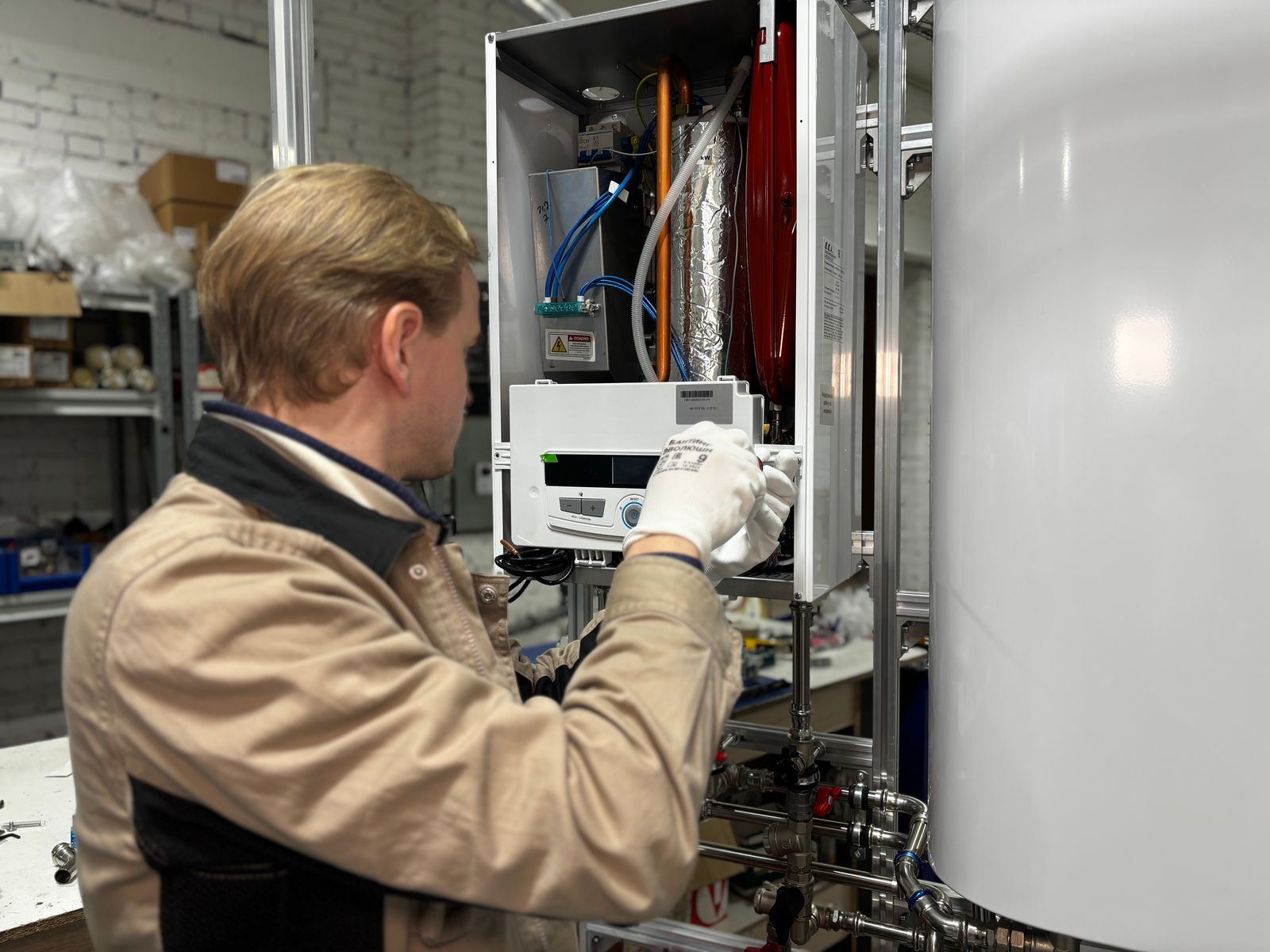
Signs You Need Water Heater Leak Repair in Anderson
Most tanks announce trouble weeks or months ahead with rumbling noises, rusty water, or hot showers that keep getting shorter. Here are the most common indicators that it's time to call a professional:
- Water dripping from the relief valve or out of the end of its discharge pipe
- A musty odor or soft floor around the heater location
- Higher water use with no obvious explanation
- A wet floor near the water heater that keeps coming back
- A weeping drain spigot on the lower front of the heater
- Rust, green corrosion, or white crust on the fittings at the top of the tank
- Water inside the burner compartment of a gas heater
- Rusty or discolored hot water paired with dampness at the base
Small Symptoms, Big Consequences
Left alone, even minor symptoms like rumbling or temperatures that swing from hot to warm tend to mean the heater is working its way toward a breakdown. Don't wait. Get Anderson Water Heater on the phone at (765) 202-7601 and we'll get a technician scheduled.
Get Water Heater Leak Repair Handled Today
Our experienced technicians are standing by to help.
Call (765) 202-7601 TodayCommon Questions We Hear
The Benefits of Professional Water Heater Leak Repair
Water heater leaks are easy to misread. A drip that appears to come from the bottom may start at a fitting on top and run down the jacket, and condensation on a cold tank can look exactly like a failure. Buying the wrong part is money down the drain, and overlooking a tank that is starting to go can lead to a much bigger flood later. Safety is part of the picture as well. The relief valve guards the tank against runaway heat and pressure, and capping or plugging it to stop a drip can set up a violent failure. Corroded fittings on an older tank can crack under a wrench, and electric heaters sit on 240-volt circuits that do not mix well with wet floors.
With a trained eye, the answer usually comes quickly. We isolate each possible source in turn, confirm it with fresh water on a dried surface, and measure static pressure so the fix actually lasts. Worn relief valves, weeping drain valves, and corroded connections are swapped the same visit, and pressure problems get a permanent fix, whether that is an expansion tank or a pressure-reducing valve. A rusted-through tank gets an honest replacement recommendation rather than a patch, and we can add a piped drain pan and a leak sensor to protect your home going forward.
What to Expect From Our Team
Every visit follows a step-by-step method built around testing first and replacing parts only when the readings call for it. Here's how we handle water heater leak repair from start to finish:
Stop & Protect
We help you close the cold supply and shut off gas or power, then protect nearby flooring and belongings so the damage stops spreading.
Find Where It Starts
We dry the tank and fittings, then check the relief valve and discharge pipe, the drain valve, the top connections, and the burner area one at a time.
Measure What Caused It
Leaks often have a cause behind the cause. Pressure above about 80 psi or a missing expansion tank gets found and corrected.
Lasting Repair
We replace the failed part, refill and purge the tank, restart the heater, and confirm every joint stays dry. A leaking tank gets an honest replacement recommendation instead.
Tips to Keep Your Water Heater Healthy
A few preventive steps can help you avoid a cold shower or a wet floor down the road. Here are our recommendations:
- A battery leak alarm beside the heater costs little and can catch a problem days sooner
- Make sure a closed plumbing system has a working expansion tank to absorb heated water
- Inspecting the anode rod periodically is one of the best ways to delay a tank leak
- Glance at the heater monthly for damp spots, rust, or crust on the fittings
- Install a drain pan piped to a safe spot, which matters most for attic, closet, and upstairs heaters
- Check your water pressure; if it runs above about 80 psi, a pressure-reducing valve protects the tank and valves
- Annual flushing removes sediment that traps heat against the tank floor
DIY vs. Professional Water Heater Leak Repair
Some simple checks are fine to do yourself, but most water heater repairs benefit from professional tools, training, and experience. A side-by-side look:
| Consideration | Doing It Yourself | Professional Service |
|---|---|---|
| Diagnosis | Guess based on where water collects | Leak traced to its true starting point |
| Relief Valve | Valve swapped without checking why | Valve and pressure both addressed |
| Corroded Connections | Forced loose and damaged further | Corroded connections replaced with new fittings |
| Condensation vs Leak | Condensation mistaken for tank failure | False leaks ruled out with testing |
| Protecting the Home | Floors left exposed to the next leak | Protection added where it matters most |
| Result | Drip returns in weeks | Leak solved and cause corrected |
Book a Visit Today
Every day a leak or a failing part goes unchecked puts more stress on the tank. Get Anderson Water Heater on the job today.
Call (765) 202-7601 NowAreas We Serve for Water Heater Leak Repair
Wherever you are in the area, the same experienced team shows up with the same parts and the same pricing. Find your community below.